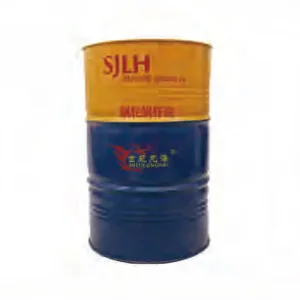
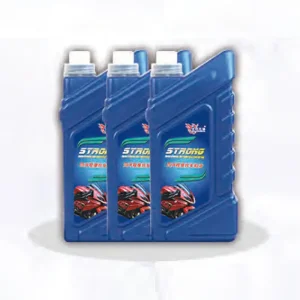
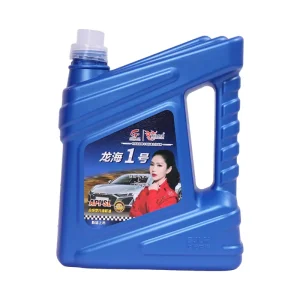
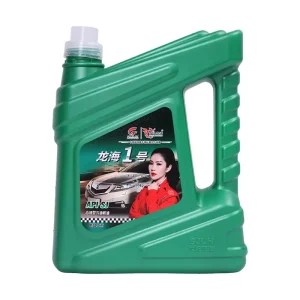
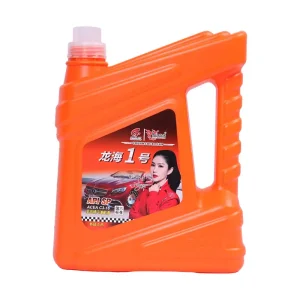
Premium synthetic solutions formulated for modern high-performance engines and complex industrial applications.
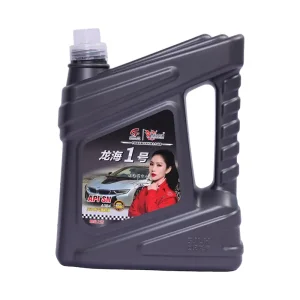
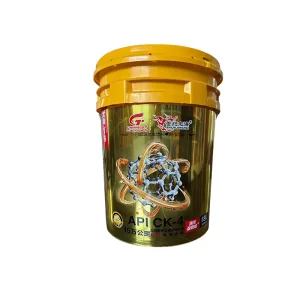
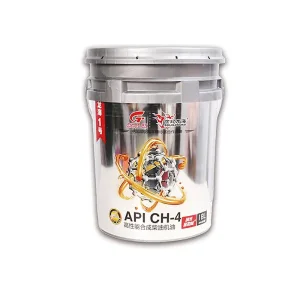
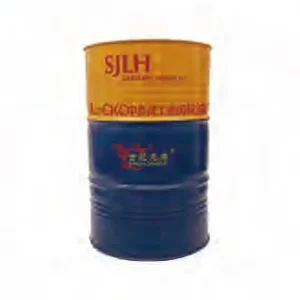
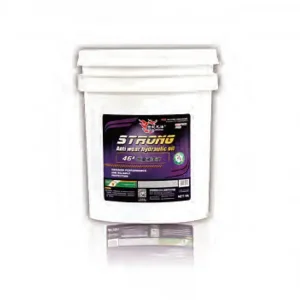
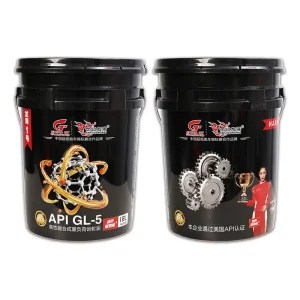
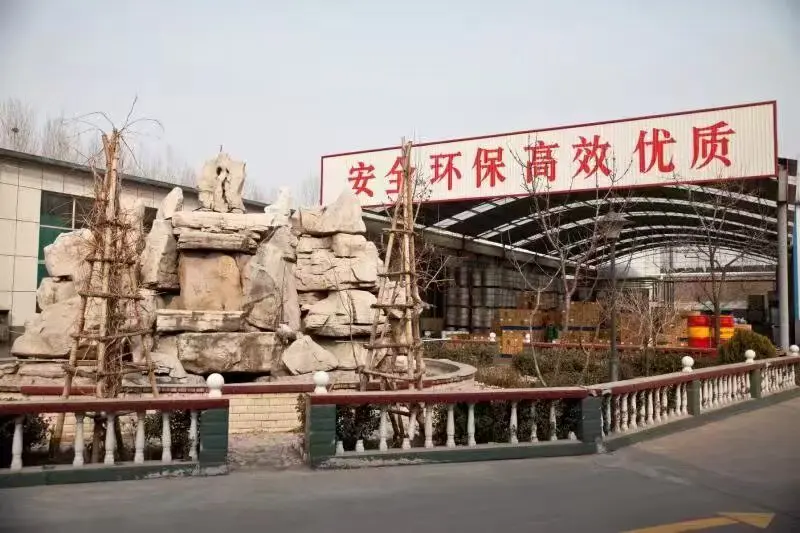
In the global automotive market, sourcing high-performance passenger car motor oils (PCMO) requires a deep alignment between bulk buyers, distributors, and modern manufacturing facilities. The role of a wholesale gasoline motor oil factory supplier goes far beyond simple chemical mixing; it requires complex, high-shear blending systems, precise molecular engineering, and absolute batch consistency. Established in 2009 in Zibo, Shandong, Shandong Longhai Lubrication Technology Development Co., Ltd. has evolved into a premier high-tech enterprise integrating R&D, precision manufacturing, and strategic sales networks. Over the past 15 years, we have optimized our industrial supply chain to ensure high-performance options for extreme wear protection and reduced fuel emissions globally.
Procurement managers and industrial suppliers must evaluate lubricants based on international standards such as API (American Petroleum Institute), ACEA (Association des Constructeurs Européens d'Automobiles), and individual OEM certifications. At Shandong Longhai, our formulations—including our proprietary "Century Longhai" brand and the strategic British "A Ba" series—are developed to meet and exceed these performance margins. Insured by the People's Insurance Company of China (PICC), our products provide global supply chains with verified quality assurance.
The performance of modern gasoline motor oil is heavily determined by its base oil classification and additive packages. Group I base oils are obsolete for modern engines, while Group II hydrocracked base oils offer excellent volatility protection for standard engines. Group III and Group IV (Polyalphaolefins - PAO) synthetics provide the thermal stability, oxidation resistance, and low-temperature flowability required by next-generation engines.
By maintaining strategic relationships with major global chemical suppliers, Shandong Longhai integrates advanced detergent-dispersant systems, shear-stable viscosity index improvers (VIIs), and organic friction modifiers into our formulations. This tech stack ensures that our SN and SP grade fully synthetic motor oils maintain a durable oil film even under high thermal stress and shear forces, mitigating Low-Speed Pre-Ignition (LSPI) in gasoline direct-injection (GDI) turbocharged engines.
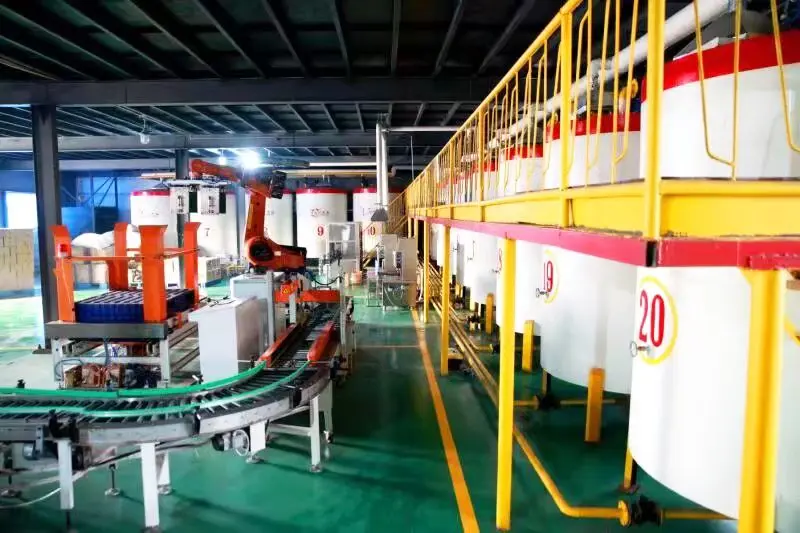
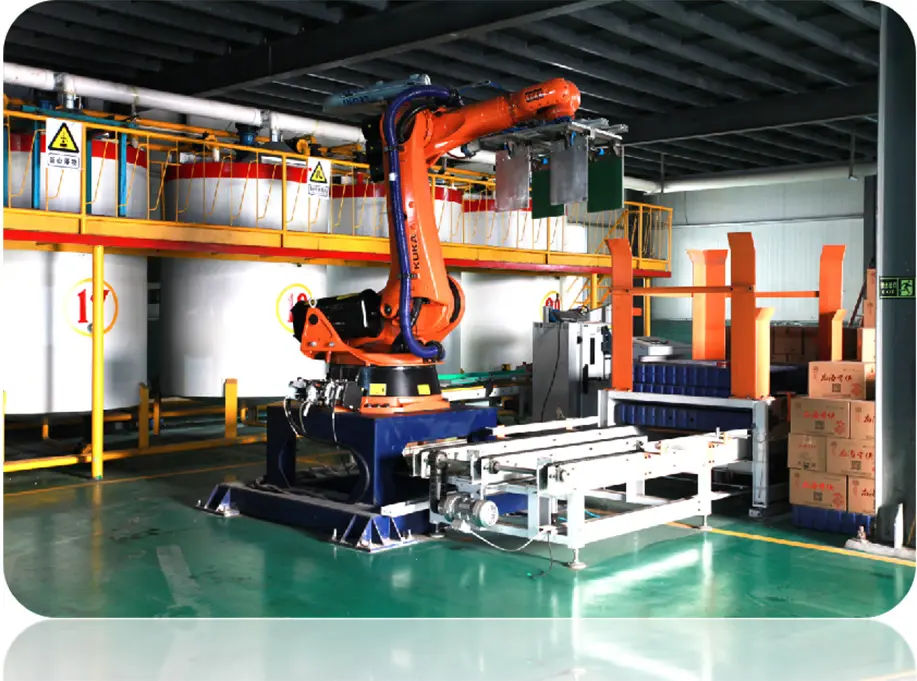
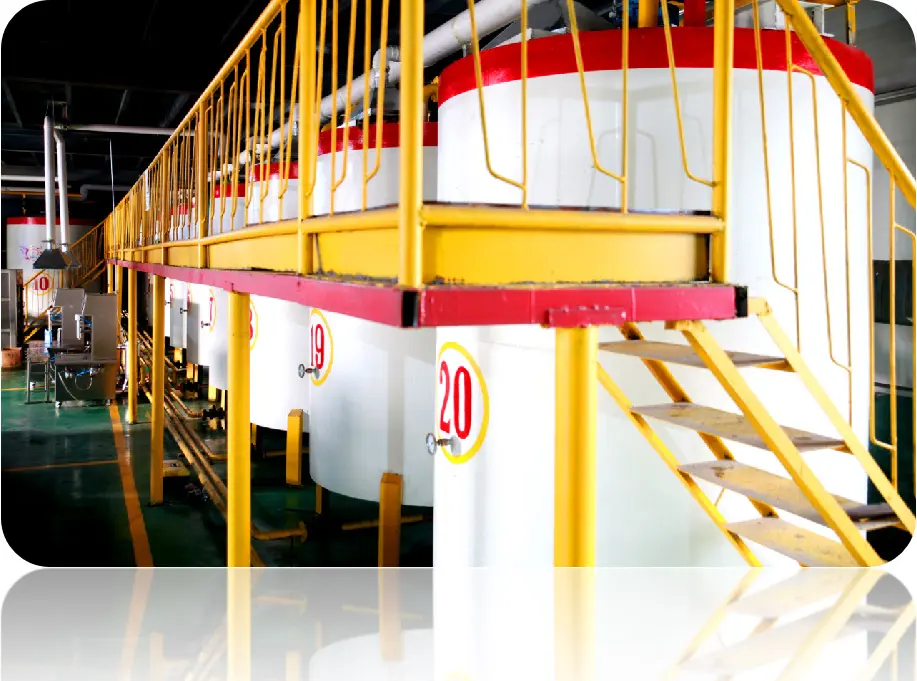
An overview of our precision manufacturing capabilities, filling accuracy, and scalable production pipelines.
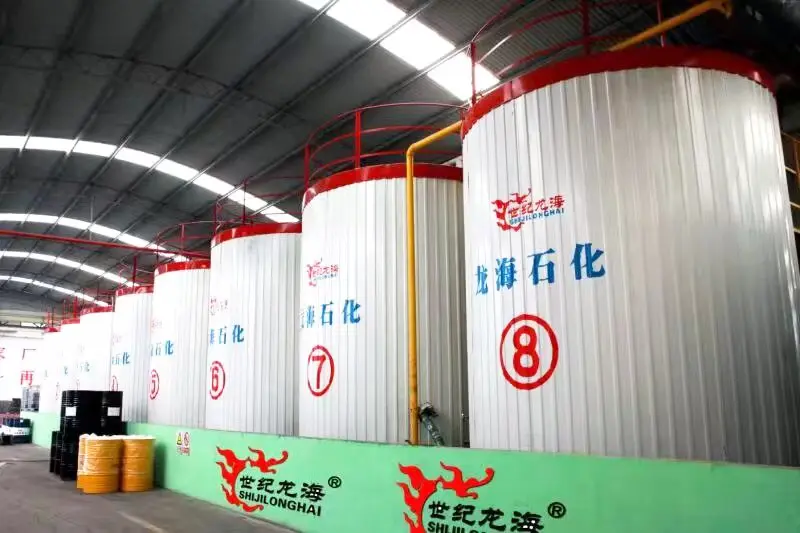
Shandong Longhai's modern production base spans over 131 acres, with an annual output capacity of 200,000 tons of finished lubricants. Our advanced blending lines utilize high-accuracy flow control and automated temperature systems to ensure uniform additive dissolution.
Our packaging line utilizes advanced volumetric and metering systems, maintaining a precise filling tolerance of 1‰ to 2‰. This setup increases filling output by 20% to 35% compared to traditional lines, optimizing lead times and helping bulk distributors maintain stable inventory levels.
We offer tailormade formulation adjustments to meet the needs of regional climate variations, local emissions regulations, and specific performance benchmarks.
From high-viscosity formulations optimized for high-temperature regions to energy-conserving low-viscosity synthetics (like 0W-20, 0W-16) for cold climates, our engineering team works with clients from concept through to packaging design. This ensures that every private label product meets the exact requirements of its target market.
The automotive lubricants market is undergoing a major technological transition driven by stricter environmental standards and updates to international performance specifications. Major industry groups are moving away from older standards to modern API SP and ILSAC GF-6 sequences. These new protocols place a strong emphasis on wear prevention, high thermal stability, fuel economy, and mitigating Low-Speed Pre-Ignition (LSPI) in turbocharged gasoline direct-injection engines.
Global vehicle manufacturers are increasingly specifying ultra-low viscosity grades like SAE 0W-20, 0W-16, and even 0W-12. These thin fluids minimize internal fluid friction, reducing parasitic energy loss and improving overall fuel efficiency. However, lowering fluid film thickness requires advanced additive chemistries—such as modern organo-metallic friction modifiers and stable polymeric thickeners—to prevent metal-on-metal contact at critical high-pressure interfaces.
Modern downsized, turbocharged engines are prone to LSPI, an abnormal combustion event that can cause catastrophic piston damage. The latest API SP standards address this issue by regulating the concentration of calcium detergents, which are known to promote LSPI, and introducing magnesium-based cleaning agents that maintain engine cleanliness without destabilizing combustion.
Hybrid vehicles operate at lower average operating temperatures due to frequent engine stop-start cycles, making them more susceptible to moisture condensation and fuel dilution in the crankcase. Modern lubricant formulations must incorporate optimized anti-corrosion barriers and specialized dispersants to manage water emulsification, preventing premature acid formation and internal component corrosion.
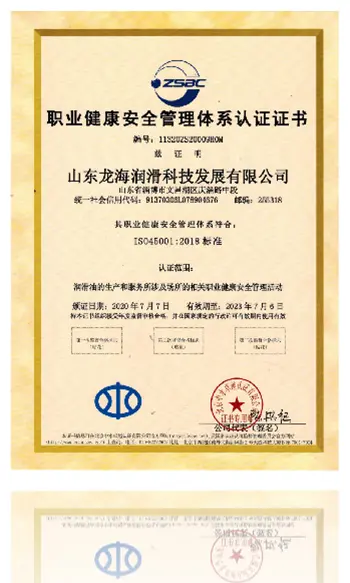
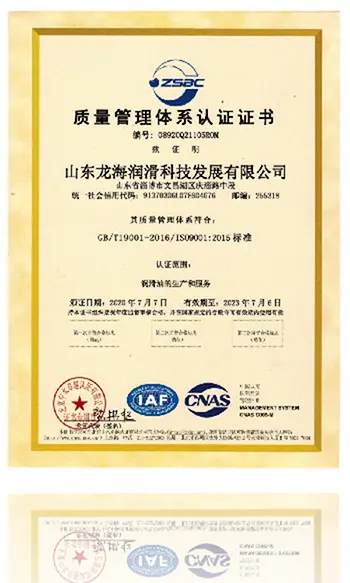
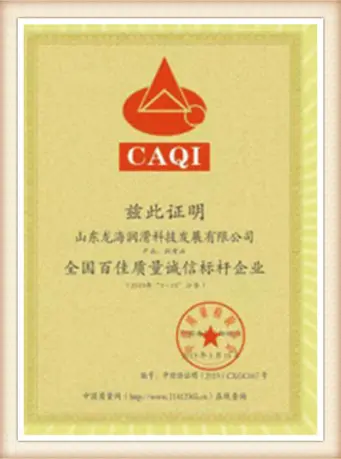
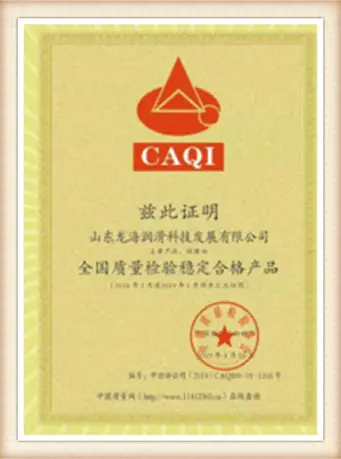
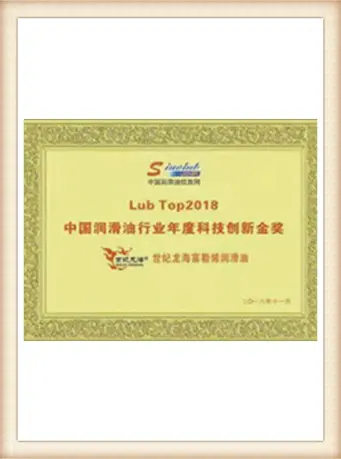
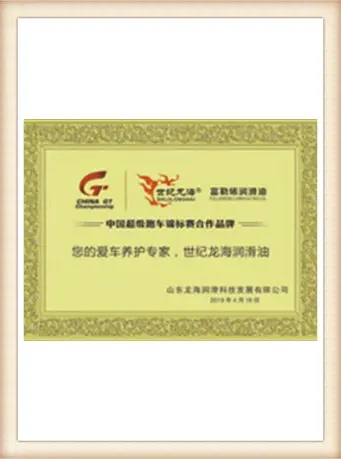
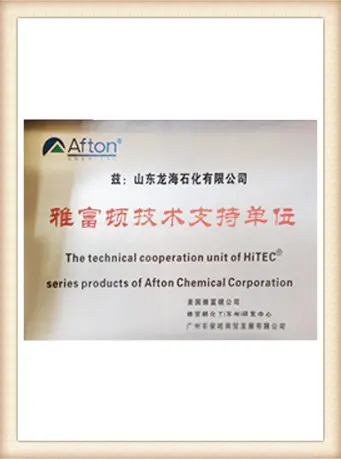
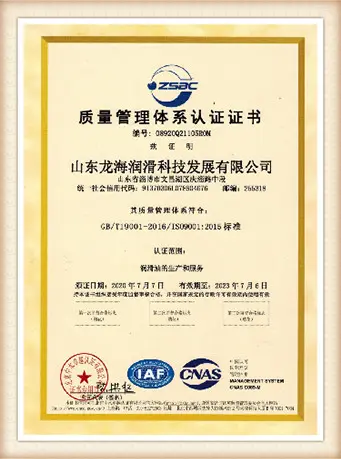
Shandong Longhai's credentials verify our commitment to international quality and environmental management standards.
Shandong Longhai Lubrication Technology has established a robust quality control system, obtaining certifications for ISO 9001:2015 Quality Management, ISO 14001 Environmental Management, and ISO 18001 Occupational Health and Safety Management. In addition, our automatic transmission fluids have achieved official Mercedes-Benz approvals, demonstrating that our formulations perform reliably under extreme operating conditions.
Every production run is tracked using automated batch-coding, and key parameters—including kinematic viscosity, viscosity index, flash point, pour point, and total base number (TBN)—are verified by our on-site precision laboratory before shipment. This level of quality control helps minimize variation, providing consistent protection for passenger vehicle fleets and heavy-duty industrial machinery.
A step-by-step process designed to take your custom lubricant requirements from initial analysis to final delivery.
Demand Analysis

Formula Development
Sample Testing
Production Delivery
After-Sales Support
Shandong Longhai Lubrication Technology Development Co., Ltd. has established a sales network covering 139 cities across 29 Chinese provinces and autonomous regions, alongside a growing presence in international export markets. Our facility is equipped with automated filling systems that maintain precision filling tolerances of 1‰-2‰, improving packaging speed by 20% to 35% compared to manual lines. This automated production capacity helps us guarantee stable lead times and consistent product quality for our global customers.
Guided by our core philosophy of "surviving by quality and promoting development by efficiency," we reinvest over 5% of our annual revenue back into lubricant R&D. We work closely with universities and independent engineering labs to develop specialized lubricants for passenger vehicles, heavy-duty diesel engines, agricultural machinery, and industrial gearboxes.
Our dedicated analysis laboratories are equipped to perform high-resolution gas chromatography, cold-cranking simulator (CCS) tests, and high-temperature high-shear (HTHS) evaluations. This setup allows us to formulate synthetic motor oils that provide reliable wear protection and oxidation resistance under a wide range of engine temperatures.
Selecting a wholesale supplier requires mapping the correct viscosity and performance specifications to the end-use application. The table below outlines the primary designations used across passenger cars, commercial transport, and industrial machinery:
For industrial operators, the purchase price of a lubricant is only one component of its overall economic impact. Higher quality base oils and optimized additive packages extend drain intervals, reducing oil consumption and labor costs. Improved wear protection also minimizes component replacement and unscheduled down-time, helping to lower total operating costs.
Common questions answered by our engineering and logistics specialists regarding wholesale procurement.
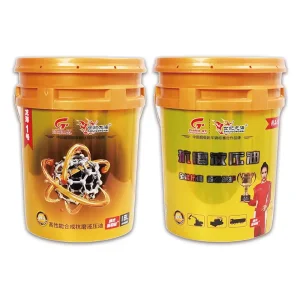
High-performance lubricants formulated for heavy-duty engines, transmission systems, and critical industrial applications.
 Longhai